Table of Contents
Teeth usually don’t fail all at once.
They give little warnings first. Subtle ones. Easy-to-ignore ones. And most people do exactly that — ignore them — until a tooth finally breaks and suddenly things feel urgent.
The goal of this post is simple: help you recognize the signs you need a dental crown before you’re dealing with pain, stress, or an unexpected dental emergency.
Because timing changes everything.
When Teeth Start to Weaken, They Don’t Always Hurt
One of the most frustrating things about tooth damage is how quiet it can be.
A tooth can be cracked, worn down, or structurally weak without causing constant pain. And because it still “works,” it’s easy to assume it’s fine.
But here’s what we see all the time at Kootenai Family Dentistry: by the time pain shows up, the tooth has often been struggling for a while.
That’s why recognizing early symptoms of a weakened tooth matters.
Common Signs You Need a Dental Crown
Let’s walk through the most common warning signs we see in real patients.
1. Pain When Biting Down
If you feel a sharp or inconsistent pain when chewing, that’s often one of the earliest cracked tooth symptoms.
It may not happen every time. That’s actually a clue. Intermittent pain often points to a tooth that’s flexing under pressure — something a crown is designed to prevent.
2. You’re Wondering: “Do I Need a Crown or a Filling?”
This question comes up a lot.
A filling works well when there’s still enough healthy tooth structure left to support it. But once a tooth has:
- A large filling
- Repeated decay
- Cracks or fractures
…that’s when we start talking about large filling support and whether the tooth needs something stronger.
If you’re asking yourself, “Do I need a crown or a filling?” — that’s often a sign the tooth is already on the edge.
3. Your Tooth Has a Large or Old Filling
Fillings aren’t permanent. Over time, they wear down, loosen, or allow cracks to form around them.
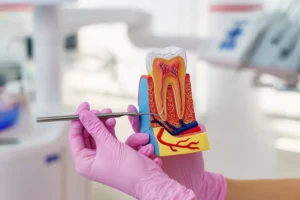
When a filling takes up a big portion of the tooth, the remaining structure becomes vulnerable. A crown acts like a helmet, holding everything together and preventing the tooth from splitting.
This is one of the most common reasons when a crown is necessary — even if the tooth doesn’t hurt yet.
4. Cracks, Chips, or Visible Damage
Not all cracks are visible. But if you can see damage, that’s your sign to act.
Even small chips can indicate deeper structural issues. And once a crack is there, it doesn’t heal on its own. It spreads.
Crowns are one of the most reliable tooth restoration options for protecting cracked or damaged teeth before they fail completely.
5. Sensitivity That Lingers
Sensitivity that sticks around — especially to hot or cold — often means the tooth’s protective layers are compromised.
That doesn’t always mean you need a crown. But it does mean the tooth needs evaluation. Sometimes sensitivity is the body’s early warning system.
Why Waiting Can Cost You the Tooth
Here’s the part people don’t always expect.
Waiting doesn’t just increase discomfort — it limits options.
A tooth that could’ve been protected with a crown may eventually need:
- A root canal
- A more complex restoration
- Or, in worst cases, removal
Crowns are often recommended before those steps become necessary. That’s the preventative side of restorative dentistry people don’t always realize exists.
What a Dental Crown Actually Does
A dental crown procedure isn’t about “covering up” a problem. It’s about reinforcement.
A crown:
- Encases the tooth
- Distributes bite forces evenly
- Prevents cracks from spreading
- Restores normal chewing function
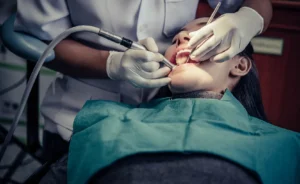
In many cases, we can place same-day crowns, meaning protection happens immediately — no temporary crown, no second visit.
Same-Day Crowns and Early Intervention
When a weakened tooth is caught early, same-day crowns can be a game changer.
Instead of waiting weeks and hoping nothing happens, the tooth is protected right away. That often makes the difference between a calm appointment and an emergency down the road.
Dr. Kalene Colwell will always talk through whether same-day treatment is appropriate or if a lab-made crown is the better option.
How This Fits Into Long-Term Oral Health
Crowns don’t exist in isolation. They’re part of a bigger picture.
That’s why this post pairs closely with:
Each topic builds on the last — and together, they help you make informed decisions earlier, not later.
What to Expect at Kootenai Family Dentistry
At Kootenai Family Dentistry, our team focuses on preserving teeth whenever possible.
Dr. Kalene Colwell takes the time to explain what’s happening, why a crown may (or may not) be recommended, and what that means for your tooth long-term.
No pressure. No rushing. Just clear information so you can decide confidently.
The Bottom Line
Teeth rarely break without warning.
The signs are usually there — small, quiet, and easy to overlook. Recognizing the signs you need a dental crown early can save your tooth, your time, and a lot of unnecessary stress.
If something doesn’t feel right, it’s worth checking. Early care gives you options. And options matter.